Today I will be discussing the sonic signatures and musical direction of two practitioners. The practitioners reside in different sub-genres within the electronic music landscape. The discussion will include musical features and characteristics that define the style and sound that is associated with these chosen practitioners. The blog will consist of research information, research on practitioners drawn from inspirations. I am looking at the type of set up used from the live setups and studio setups. I will be discussing the hardware and software used to create their sonic signature as well as looking into the instrumentation, techniques, and style of each practitioner.
J.Dilla
James Yancey Dewit, also known as J. Dilla, Dilla, and Jay Dee, is one of Hip-Hop and Neo-Soul’s most renowned electronic music practitioners. His career spanned over a decade, leaving his fingerprint embedded deep within the history of electronic music. Dilla was a practitioner who was not afraid to bend the rules and push creative boundaries. When doing so, he did not always comply with the traditional method when it came to composing music and creating his lane.
Set up & Equipment
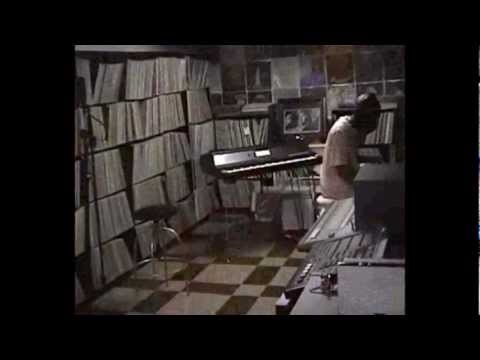
Above Dilla is pictured in his basment, here you can see a section of his vinyl collection. All of the known equipment that Dilla used are as follows: Follow link under each image for more information on the product.
Equipment
The AKAI MPC 60
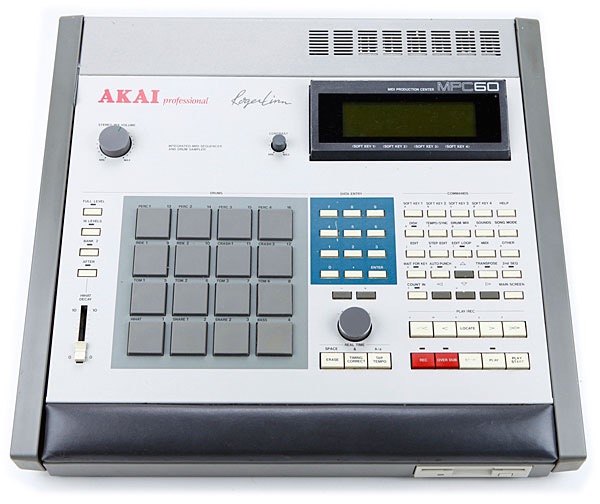
http://www.vintagesynth.com/akai/mpc60.php
The AKAI MPC 60 ll
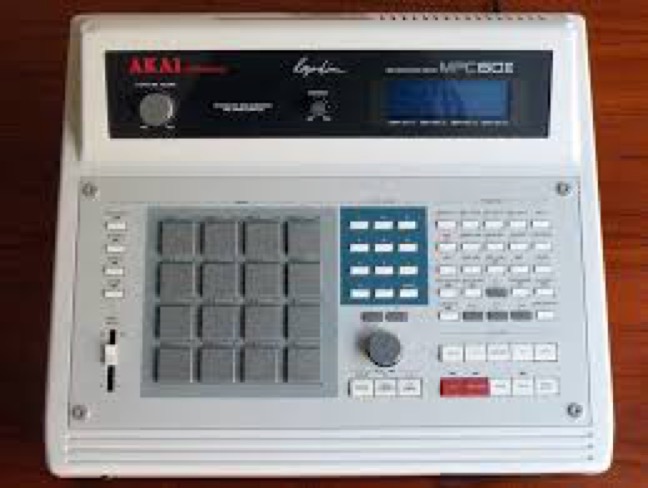
http://www.polynominal.com/akai-mpc60/index.html
The AKAI MPC 3000 (right) and the Mini Moog Voyager
A custom made monophonic analogue synthesiser(left), both owned by J.Dilla and both on show at the National Museum of African American History & Culture. Washington, DC.

https://www.moogmusic.com/synthesizers?type=73
http://www.vintagesynth.com/akai/mpc3000.php
E-MU SP-1200
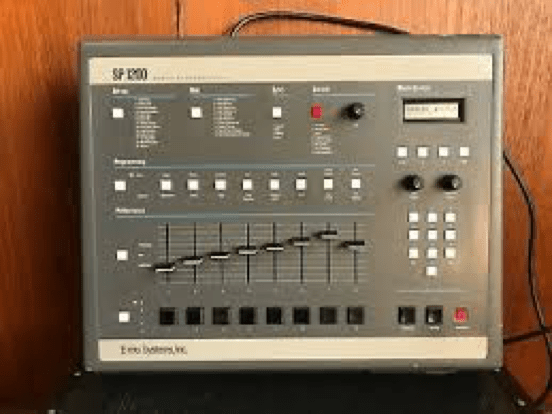
http://www.vintagesynth.com/emu/sp1200.php
E MU 12 Classic Drum Machine and Sampler
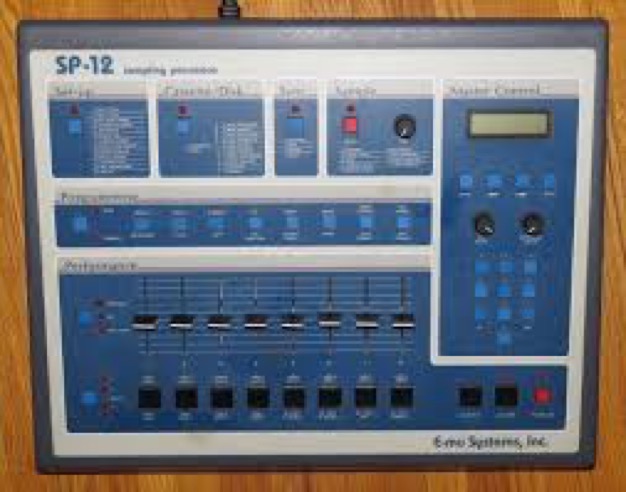
http://www.vintagesynth.com/emu/sp12.php
BOSS SP-303 Dr Sampler
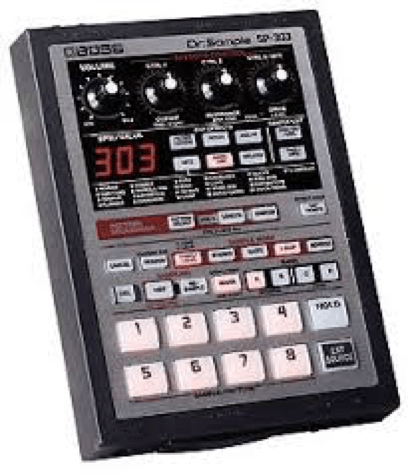
http://www.vintagesynth.com/roland/sp303.php
Korg Micro Korg Synthesiser Vocoder
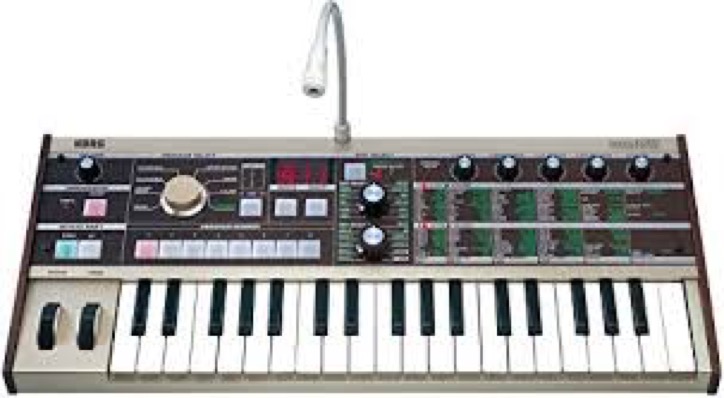
https://www.korg.com/uk/products/synthesizers/microkorg/page_3.php
Korg Electribe E X-1
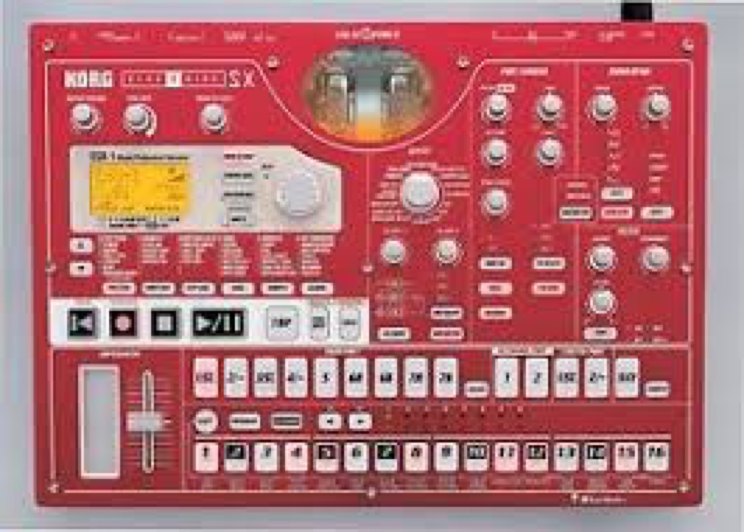
https://www.soundonsound.com/reviews/korg-esx1
E-MU PK 6
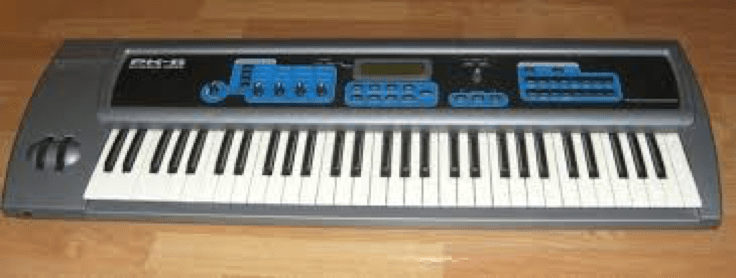
https://www.sweetwater.com/store/detail/PK6–e-mu-pk-6
Numark PT-01 Portable Record player
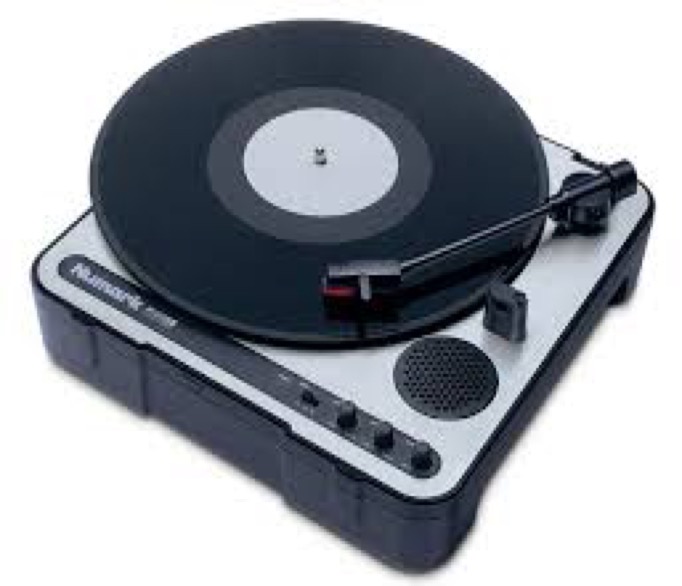
https://www.numark.com/product/pt01
Technics SL 1200 MK2 Turntable
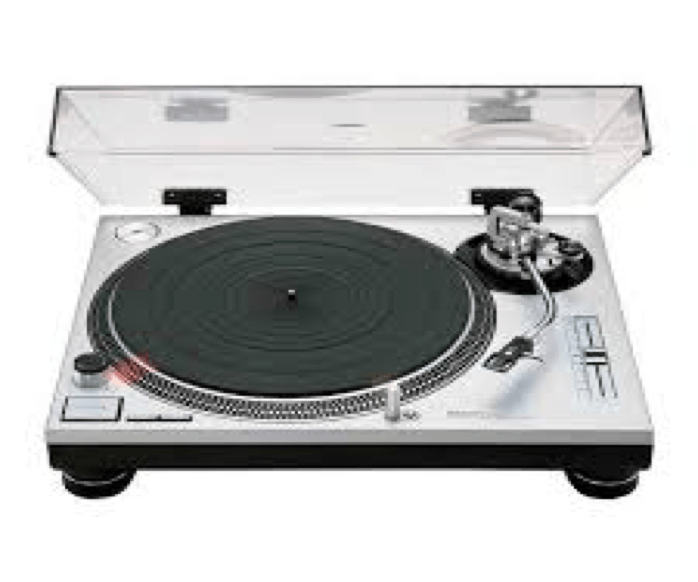
https://www.vinylengine.com/library/technics/sl-1200.shtml
Dilla learned how to play the Cello, Keyboards, Trumpets, the Violin, and the Drums at a young age.
Dilla was not shy when it came to introducing an element of live instrumentation to his compositions, Dilla would pick up a Guitar, Bass, or even jump on the keys to add chords to his arrangements. Dilla’s home set up and live set up not completely identical as Dilla would use DJ equipment at a live show playing the material he composed in the home studio.
Musical characteristics
Dilla’s most predominant technique, when composing, was sampling. He would find either obscure or nostalgic record/s, locate the section of the track he wanted to use then record it into a sampler or drum machine. Dilla would use loops and chop up drum breaks for one-shot recreating the original composition he sampled, amongst other techniques. It was by using the drum machine/s and sampler/s in this way that began to form Dilla’s Sonic Signature.
Below is a picture of Dilla using the MPC 3000.
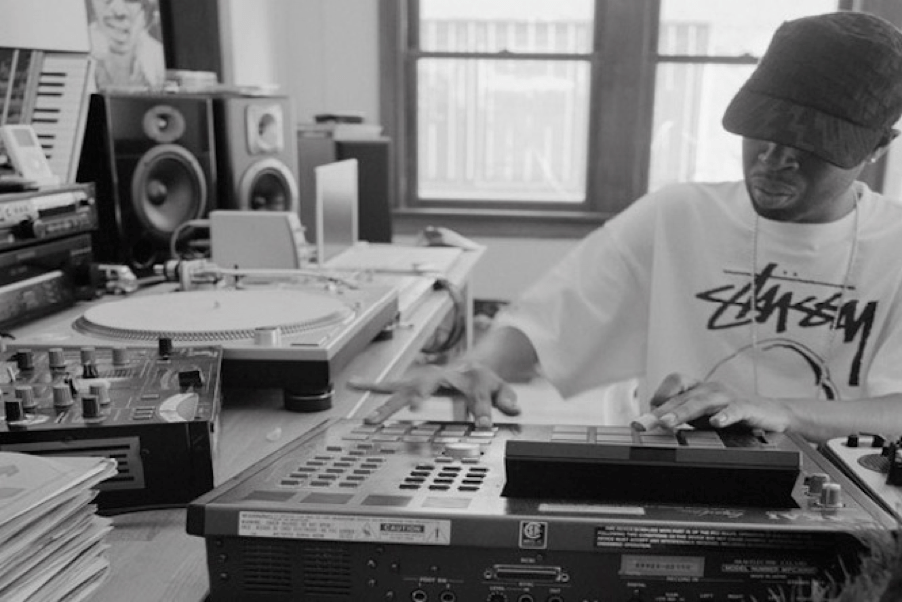
Many MPC users would use the quantization function. Quantization is a built-in function when used would quantize notes to the nearest sixteenth, which in essence would snap all recorded notes to the tempo of the grid, meaning that the track would be one hundred percent on the beat. Dilla chose to ignore this function. Another Sonic Signature of J.Dilla is how he uses filters to enhance the low end of the kick drum by cutting the mid and hi frequencies, this technique makes Dilla’s kick drums thud and knock in the majority of his compositions. Dilla would also use this technique on samples with a bassline, cutting the mid and hi frequencies to isolate the bass creating a deeper bass with a thicker texture. These frequencies would usually stay filtered out until the hook section, at this point, he would then bring the mid and the hi frequencies back in, allowing all the frequencies back through giving the composition an abundance of musical texture.
Dilla also used his Minimoog Voyager synthesiser to add original bassline to a composition. (how dilla humanised the mpc) Another Sonic Signature of J.Dilla is his placement of kick the drum. With the quantization function disabled, Dilla could slip on, off and in-between the beat, this created an unconventional style of intended loose drumming. Dilla’s style and technique was so influential, Roots drummer Questlove changed his way of drumming after listening to Dilla’s compositions describing his style as “sounding like a drunk three-year-old hitting the kick”. No quantize meant that when Dilla would finger drum a beat, the stiff electronic structure and feel would be removed. Dilla’s distinguished technique is described as “humanizing”. The programming of Dilla’s hi-hats also a part of his sonic sound signature. It was common for his compositions to consist of two hi-hats tracks loaded on alternative pads. One pad would get pitched up or maybe down in comparison to the other as well as this the pads would get sequenced into the grid on different notes. One programmed in on the quarter note, with the second playing a different rhythm altogether to create a triplet’s effect — this style of programming gave the compositions more texture by changing its timbre. The second hi-hat pad would have a lesser velocity adding more dynamics to the track. These techniques added by either finger drumming or by using the built-in note repeat function on the MPC, the speed at which the note repeats are inter-changeable. To decrease the velocity, Dilla would have turned down the desired pad in the mix within the MPC. Jazz drummer Karriem Riggins states that he learned how to play the drums by listening to Dilla’s compositions. Dilla was not afraid to take chances and switch lanes. His compositions usually based around samples from piano riffs to horns and brass elements, synth leads, or a whole section ranging from multiple genres such as Jazz, Soul, and Rock and Roll. However, to try and characterize Dilla’s style and Sonic Signature by chord structures or specific instruments would be insane as he is an experimental practitioner, the type of practitioner that feels the sound and music. J.Dilla’s Sonic Signature is also a sense of timing; his sonic sound is also a feeling. Talking of timing, another characteristic of Dilla is the way he would switch time signatures, an example of this is the composition ‘Hi’ off his last album Donuts. It starts in a 6/8 switching to a more familiar Hip Hop/Popular music 4/4-time signature. To create this type of time signature switch, Dilla would have had a sample with the 6/8-time signature. He would have chopped it up in the MPC to manipulate and rearrange the chops allowing some chops to play longer, this allowing the switch of time signature. Dilla seemed to keep things simple when it came to his arrangement techniques, making his musical landscape sound so much more exciting and vibrant. Dilla was a practitioner in the Hip Hop and Neo-Soul genre. He worked with four-bar loops composing with precise sonic detailing, structuring his beats in this way, allowing space for himself or another emcee to add lyrical content to his artefact. However, saying this, the hypnotic ‘Slum Village – Get this money’ composition by Dilla has a seven-bar loop embedded within the track giving it a different structure than his usual composition.
This still allows room for lyrics if desired. Dilla had many ways to apply his style and techniques into his compositions to create his Sonic Signature. The final method to look at today is the way he used sidechain compression to his pieces. When it comes to side chain in Hip Hop J.Dilla is the main man, he applied it into his compositions to emphasise his Kickdrums, allowing them to pump through his mix. Dilla would apply sidechain compression to his bass track then use a bus that sends the kick track to the sidechain input. Creating separation so his kick drum and bass track can work in harmony instead of against each other fighting for the same space in the frequency spectrum, adding extra rhythmical bounce to his mix. Check out this clip of Dilla in his basement also refered to as the Space Ship.
AMON TOBIN
Amon Tobin, a pioneering electronic music practitioner who has single handily carved out his lane in the electric music production sector using techniques that date back to the origins of electronic music. Tobin began producing from his bedroom studio back in the nineties. He now works from his secluded studio that is located deep in the woods.
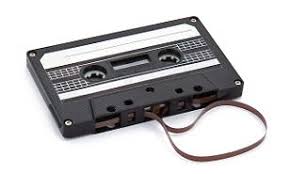
Tobin has an unconventional, yet profoundly sophisticated approach when it comes to creating his compositions which leads to ear-bending sonic sound art like no other. It was Tobin’s younger years, where he began to experiment with sound unknowingly sculping his craft. Amon would steal his father’s cassette tapes or use the recordings captured on Sunday nights top forty using his twin cassette recorder. He would then splice the tape, removing any unwanted sounds and sections. Then he would re-arrange them to make new versions “extending the break on the records transforming it into something new that reflected his idea of his surroundings’’. (Cassette tape pictured below)
Amon would later revisit this musique concrete technique to create some of his most recognised compositions. These experiments influenced by the likes of Grand Master Flash, who would extend the breaks on two records using turntables. Another inspiration of Tobin’s was the sound of Dillinja, a practitioner who was representing the Jungle scene with his 160bmp sounds pumping through dub subs. Over the following years, Amon would experiment with sound exploring to see what is possible, learning, and gaining an in-depth knowledge of sound and music, enabling him to compose compositions fuelled and motivated with curiosity. Amon’s studying and understanding of sound helped him to develop his Sonic Signature. Tobin explains his productions as being like a solution to a problem. The majority of the sounds used by Tobin are the manipulated versions of his field recordings. Amon would usually go out to capture natural elements using a recording of leaves, for a sound with higher frequencies. He might record some cutlery moving down the frequency spectrum right down to finding objects that create bass sounds. The majority of Amon’s artifacts crafted by implementing the techniques pioneered by German practitioner Pierre Schaffer, studying and evolving this style to create his unique sound. Amon also admits that the work of “Timbaland” and “The Neptune’s” aided and inspired him when creating his ‘Two Fingers’ projects.
Musical Approach
Tobin has worked on collaborative projects with the likes of Bonobo. However, he prefers to work in total isolation, and this is due to him knowing what he likes and what he dislikes as his work displays, he knows what works and what does not. When working on a project, Amon usually starts on one day, often leading into the next. Giving him time to get his arrangement to pull it apart. At this is the stage Tobin figures out the production and mixing, this process may take him a couple of weeks. When Tobin’s brain exhausts, from the complexities of sound design engineering, to recharge, he takes breaks, not conventional breaks, breaks from all the ‘noodley’ stuff.’ In these breaks, Amon works using different sounds and techniques which are on complex, and this is how the artifact Two Fingers begun these compositions have more of a rhythmical pattern based around genres such as Dub Step and Drum and Bass.
Tobin explains that these breaks free up space for him to delve back into more intricate work. Tobin, an innovative practitioner who prefers to create and develop rather than repeat himself. He has recently been working on some R&B influenced projects, which he describes as A&B’ Anger and Blues’, a style infused with dirty beats sequenced in a strange and abstract ways moving between downbeat and upbeat, this newly found style is still in the experimental stage. Tobin is always trying to evolve. However, saying this Amon uses samplers and vinyl, though he does state that in the past when using a sample, it was important that people recognised it simply so they could hear the difference. If the manipulation is heavily applied, the source sample/sound changes so much, the grains get so small, and it becomes unrecognisable that the sound could have been any sound. So Tobin decided to take sounds from anywhere.” This attitude towards sound lead to Tobin carrying a buzzing bee’s nest, which was trapped under a glass bowl in the studio, trying to create a new sound and at the same time emulate the sound of a surf guitar on Esther’s – ISAM. This is Amon developing and moving away from more traditional methods of making music and creating sound. Tobin never wanting to disrespect the original practitioner by recontextualise chunks of old music sampling with a millennial backdrop, he believes this to be too easy, lazy even, he wanted a way to pay homage to the original practitioner, this is one of the thought processes behind the development of his style. To manipulate sounds or a sample, Tobin applies filters and uses EQ, this is how he will isolate certain sounds and instruments or even remove them, he might remove the entire frequency of a sound, removing that specific sound or diluting it so much that you may hear it in the depth of the track with the option to hide it with other sounds. Sounds when pushed to the extremity by EQ can result in real harsh sounds however, as Tobin’s style is experimental it seems to complement his artistry becoming a characteristic of his sound.
Sometimes things work and sometimes things don’t work. Tobin uses multiple sounds/samples to create his melodies, and once he has his melody, he might run it through a modulation effect or a filter then resample it, giving him a new multi-sampled instrument or just a new even sound/sample. This technique allows Tobin to create a unique and original sound, once the new sound is created and resampledd it can be converted from its waveform into sines and harmonics, by doing this Amon has plenty of room to maneuver in the mix.
Tool & Techniques
When Amon invests in tools of his trade, he then learns them and gains an in-depth understanding of their mechanics, and this applies to all his equipment. Knowing each piece of equipment to this extent is undoubtedly a significant factor to Amon Tobin creating his Sonic Signature. That said, Amon Tobin has and uses many different devices when composing, which differs from studio sessions to live performances. Here is a list of known equipment used by Tobin;
Software Plugins and VSTS
Symbolic Sound Kyma
INA GRM Tools
Audio Ease Altiverb Plugin
Native Instruments Reaktor Software Synthesizer
Native Instruments Kontakt 5 Software Sampler
u-he Zebra
Waves IR1 Convolution Reverb Plugin
Keyboards and Synthesizers
Haken Continuum Fingerboard
Moog Minimoog Voyger
Roland VariOS
Access Virus TI Snow Synthesizer
Studio Equipment
Mutronics Mutator
Madrona Labs Sound plane Model A
Nagra IV-S
Symbolic Sound Pacarana
Akai S6000
Mackie D8B
TC Electronic FireworX Multi Effects Processor
Eventide H8000FW Multi-Channel Effects System
Manley Massive Passive Stereo Tube EQ
Native Instruments Maschine
API 2500 Stereo Compressor
Chandler Limited TG1 Abbey Road SE Limiter
Jazz Mutant Lemur Multitouch Modular Controller
Microphones
Earthworks QTC50
Blue Bluebird
Studio
The main piece of studio equipment Amon uses is his Haken Continuum Fingerboard.
Tobin states this has played a considerable role in his creative process. The Continuum is like a keyboard; it’s a continuous touch and pressure-sensitive controller beat port, mapped to a DAW. Depending on the amount of pressure Amon applies when playing can change the timbre of a sound, manipulate sound and triggering effects, this is mapped to the software. Symbolic Sound Kyma Tobin then sequences his tracks in Cubase. Symbolic Sound Kyma is a powerful sound design workstation with real-time responsive control over sound parameters. Its effectiveness comes from its unique set of algorithms. The Continuum and Kyma work in harmony alongside each other with the Continuum having a built-in collection of sound designs in Kyma. The Continuum works on an X, Y, Z axes, and This unlocks a massive amount of creative potential for Amon to compose having the ultimate control over his sounds. This technology allowed Tobin to dive into sound designs, acoustic modeling, and synthesis. Tobin States, “I wanted to make sound design a part of the music, and vice versa—something more than just creating samples. The starting point was based on the idea of trying to build playable instruments out of anything I can find.” These tools help Amon to continue to develop his sound, further combining soundscapes analog experimentation.
Live
ISAM Tobin’s most ambitious performance involving audio and a visual stimulant. Tobin situated in the middle of the ginormous cubic structure that was designed especially for this performance; it was from within this structure that Tobin had his simple DJ set up. However, although Tobin was operating from a simple DJ set up, the performance was far from that. With this setup, Amon was able to control and trigger his patches, and sounds infused with sophisticated sound design bringing his studio-based soundscape live to the stage. Pushing the boundaries of technological advances to put on a phenomenal show blending his Sonic Sounds Signature with visual art. Tobin used real-time projection mapping, 3D animation, real-time computer graphics using Touch Designer. He wanted his sound to have an optical stimulating element. Amon Tobin’s musical landscapes undeniably fuelled with; Filters, saturation, water drops, sidechain, drums, synths, vocals, percussion, fades, sweeps, samples, bass, reverb, reverb tails, reversing, warped(tempo), compression, drones, heavily processed vocals, pitch shift, layers (Pitched up or down an octave), vocals made up of multiple channels manipulated, doubling up kicks with sub-bass sounds, musique concrete(replacing hi-hats and snares), gloopy sounds, reverse guitars, warped tempo, fluid movement, and fluid movement. Here is Amon Tobin – ASIM (LIVE), I’ll leave it to you to decide if he was successful at combining his bout audio and visual in this art installation.
All links used for Amon Tobin researched as followed;
https://www.clashmusic.com/features/in-conversation-amon-tobin
https://www.soundonsound.com/people/amon-tobin
https://djmag.com/content/amon-tobin-sound-science
http://exclaim.ca/music/article/amon_tobin-in_sound_from_way_out_where
https://www.emusician.com/artists/amon-tobin https://www.monsterfresh.com/2016/06/09/watchdownload-amon-tobin-isam-live-outside-lands-2015/
https://www.emusician.com/artists/amon-tobin
http://www.youtube.com/watch?v=oxVVm75k_8Q&t=7s
http://www.youtube.com/watch?v=gHbj3dQxqIM
All links used for J.Dilla researched as followed;
Websites
https://nmaahc.si.edu/explore/stories/collection/j-dillas-distinctive-sound
https://dancingastronaut.com/2017/12/how-j-dilla-used-a-sampler-mark-hip-hop-history/ .
www.youtube.com/watch?v=klQh1ld-Msg
www.youtube.com/watch?v=BOB1asfsXDo
www.youtube.com/watch?v=sl8Sfoszew8
 Electronic music production analysis